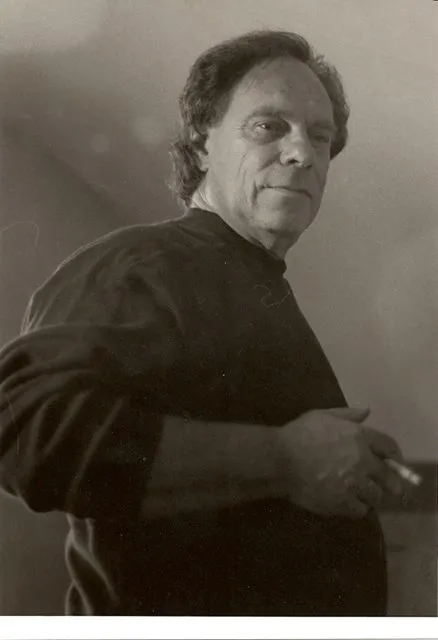
About the Book Author
Ronald M. Chase, M.D. — Biography
Ronald M. Chase, M.D., is a physician, philosopher, inventor and author whose work bridges psychiatry, trauma studies, and critical perspectives on science and media. A graduate of the University of Louisville with a dual focus in philosophy and chemistry, Dr. Chase later served as a military psychiatrist during the Vietnam War, an experience that shaped his lifelong exploration of emotional trauma and post-traumatic stress.
Through his website Media-Terror.com, Dr. Chase presents a bold critique of how modern science and technology have distorted public understanding of mental health and the nature of disease. His writing-described as creative nonfiction and psychological primer-examines the intersection of media influence, fear, and the human experience of suffering. Central to his work is the assertion that post-traumatic stress is a natural human response, not a disorder, and that open discourse on science, censorship, and emotion is essential for societal healing.
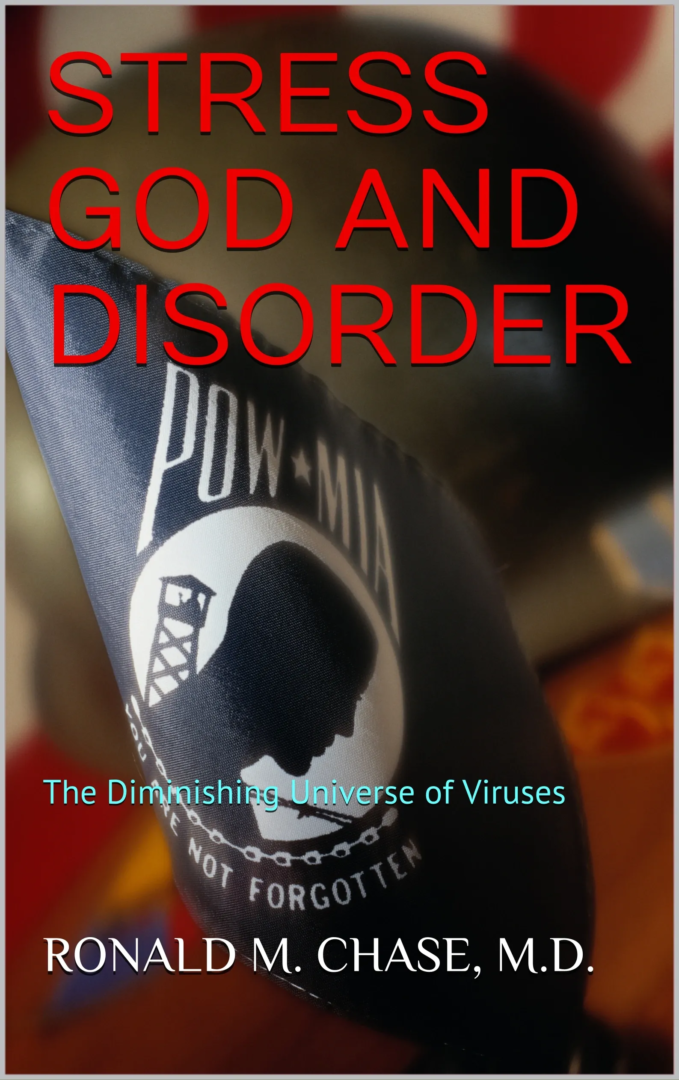
Dr. Chase’s books, including Aftermath: a War of Memories, Killing Psychiatry; or, the Ineffable Virus combine psychotherapy transcripts, cell and molecular biologist interview, and philosophical analysis to challenge prevailing narratives about viruses, immunity, and trauma. His controversial 2019 book Stress, God, and Disorder was censored by Amazon, further fueling his advocacy for intellectual freedom in medicine and media.
Today, through Media-Terror.com, video commentary, and public essays, Dr. Chase continues to question the boundaries between news and propaganda, science and belief, and the human and the technological. His work invites readers to reconsider the relationship between stress, consciousness, and truth in a world increasingly shaped by information warfare.
Other Experiences
Other professional experiences included: Staff psychiatrist at the Department of Corrections at Rikers Island. Was a psychiatric consultant for the District Attorney in New York City and expert witness in capital offense cases for the Assistant United States Attorney, Eastern District of New York. He was recruited to serve as the first staff psychiatrist at the Metropolitan Correctional Center in New York City. Contributing forensic psychiatrist on O’Reilly’s “Inside Edition” in review of elements of the O.J. Simpson case.
His concern for the inordinate number of suicide deaths among soldiers returning from deployments in Iraq and Afghanistan prompted him to take a position with the U.S. Army as Psychiatrist Contractor at Winn Army Community Hospital, Third Infantry Division, Ft. Stewart, Georgia.
After forty years in the practice of psychiatry he returned to medicine and practiced as a Medical Consultant to the Department of Health.
During the Vietnam War he took a military residency in psychiatry at the National Naval Medical Center, Walter Reed Army Medical Center (Consortium), and St. Elizabeth’s Hospital, Washington, D.C. for chronic mental illnesses. He had early exposure to the internationally acclaimed psychoanalyst, Harold F. Searles, M.D. who as mentor inspired Dr. Chase's entire career. As Lieutenant Commander, Medical Corps, United States Navy he was later stationed at U.S. Naval Hospital, Orlando, Florida as Chief of Psychiatry, and Psychiatric Consultant to the U.S. Air Force, McCoy AFB, Orlando, Florida.
He became a Fellow of the Academy of Psychosomatic Medicine and did a fellowship in psychosomatics at the Chicago Medical School mentored by Hyman Garner, M.D. Chair, Department of Psychiatry. He was appointed to head the psychiatric liaison program for hemodialysis and oncology programs in Cook County, Chicago, Illinois.
At Veterans Administration, VAMC, hospital he developed the first Vietnam Veterans Inpatient Unit for the treatment of Post-Traumatic Stress Disorders and concluded PTSD is not a Disorder. he became a whistleblower regarding corruption and abuse of power at that facility.